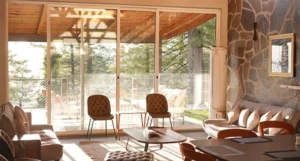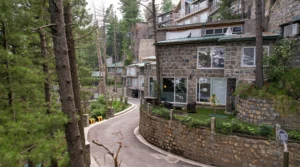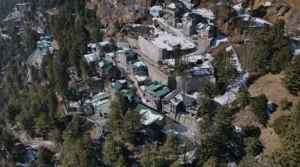
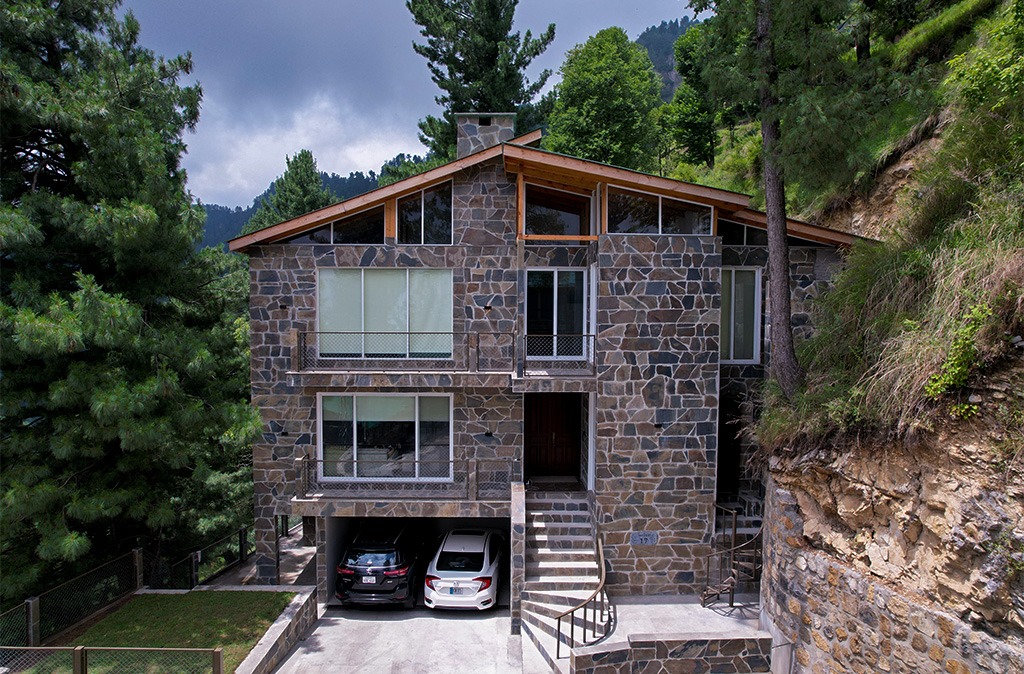
Passive Income Real Estate Pakistan is no longer just a buzzword for overseas investors at Blue Pine Mountain Homes in Galiyat; it’s a fully furnished stone villa that earns rental income while you enjoy the mountains.
That is not the model most investors imagine when they think about passive income.
A managed mountain villa operates differently. Instead of relying on one tenant paying monthly rent, the property generates revenue through short-term tourism demand. Instead of the owner coordinating bookings and maintenance, a professional operator manages the process. Instead of earning only from rent, the property benefits from both rental income and capital appreciation.
This is why passive-income real estate in Pakistan is increasingly associated with managed mountain developments in Galiyat rather than traditional city apartments.
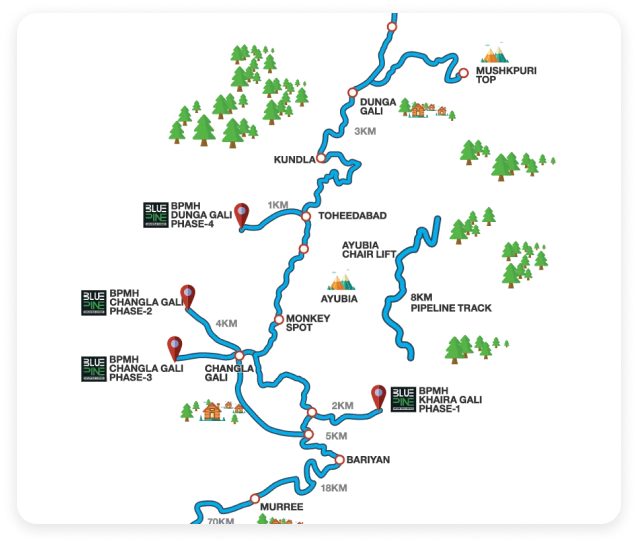
Located between 6,400 and 6,800 feet, within 80 to 95 kilometres of Islamabad, and spanning locations such as Abbottabad, Changla Gali, Nathia Gali, and routes toward Mushkpuri Peak, the Galiyat region has become one of the country’s most consistent tourism-driven property markets.
This guide explains how the model works, how owners generate income while living abroad, and why passive income real estate in Pakistan is increasingly moving away from traditional urban investments.
What Makes Real Estate Genuinely Passive in Pakistan?
The phrase passive income is often used loosely in real estate marketing.
A property does not become passive simply because someone else occupies it.
True passive income real estate in Pakistan requires three things.
First, the property must sit in a location with consistent rental demand.
Second, a professional management structure must handle bookings, maintenance, and operations.
Third, the revenue-sharing arrangement must be documented clearly so the owner knows exactly how income is generated and distributed.
If any one of these elements is missing, the investment becomes active rather than passive.
At that point, passive income real estate in Pakistan becomes exactly what investors expect it to be: an income-producing asset that does not require daily involvement.
Why Galiyat Outperforms City Property for Rental Yield
Urban property markets and mountain property markets operate under completely different economic conditions. A managed rental villa in Galiyat performs differently from traditional urban property because tourism demand is concentrated in a high-value season.
What Passive Income Real Estate in Pakistan Earns Per Tourist Season
The Galiyat tourist season typically lasts between 100 and 130 days every year.
During this period, visitors from Lahore, Islamabad, Karachi, and overseas Pakistani communities actively seek short-term accommodation in the hills.
Instead of earning one monthly rent payment, a villa earns nightly rates.
This concentrated demand is why passive income real estate in Pakistan can generate substantially higher returns in mountain markets than in urban residential markets.
Properties positioned near Nathia Gali and overlooking routes toward Mushkpuri Peak command premium nightly rates because visitors are paying for access to a location that city apartments cannot replicate.
A city apartment might remain occupied for twelve months.
A mountain villa can generate a comparable annual income within a fraction of that time.
That difference explains why passive income real estate in Pakistan is increasingly being evaluated through tourism-driven assets rather than traditional residential rentals.
Why Managed Rental Villa Galiyat Inventory Is Scarce
Supply matters just as much as demand.
Many investors assume strong returns eventually attract enough competitors to reduce profitability. In Galiyat, geography and regulation limit that outcome.
The region stretches from the outskirts of Abbottabad through Changla Gali and onward toward Nathia Gali. Large-scale development is constrained by terrain, environmental regulations, and approval requirements.
This creates a scarcity premium.
A managed villa operating within a verified development remains difficult to replicate.
That scarcity is exactly why passive income real estate investors in Pakistan are increasingly focusing on Galiyat.
The combination of limited supply and growing tourism demand creates a market where rental rates remain resilient even as buyer interest continues to increase.
No city-based real estate in Pakistan can replicate this combination of scarcity, regulated supply, and tourism-driven demand.
How the Numbers Work for Passive Income Real Estate in Pakistan
Every investment eventually comes down to numbers.
For a managed mountain villa in Galiyat, the answer rests on three figures you should run before committing.
Buyers evaluating a Galiyat real estate investment return should analyze both rental income and capital appreciation rather than focusing on yield alone.
The Three Figures Every Passive Income Real Estate Pakistan Buyer Must Run
The passive income from real estate in Pakistan calculation starts with verified land pricing.
Current developments in Galiyat operate around a benchmark of PKR 40,000 per square foot.
Villas typically range between 10 Marla and 1.5 Kanal, offering freehold ownership registered through the KPK Land Revenue Department rather than leasehold structures.
This matters because ownership security directly affects long-term value.
The second figure is the operating model.
Most managed developments operate under a 60:40 revenue-sharing arrangement.
Owners receive 60 percent of rental proceeds while the operator retains 40 percent to cover occupancy management, maintenance, marketing, housekeeping, and guest services.
This is what separates passive income real estate in Pakistan from self-managed city assets.
The third figure is realized performance.
Blue Pine Mountain Homes Phase 1 Khaira Gali owners have been documented earning 10 to 12 percent annual ROI, with rental income reaching up to PKR 150,000 per day during peak tourist season.
Passive income real estate in Pakistan only justifies the premium when returns are documented rather than projected.
How the 60:40 Split Makes Galiyat Real Estate Investment Return Genuinely Passive
The revenue-sharing model removes operational responsibility from the owner.
The owner does not manage bookings, guest check-ins, marketing or repairs.
Instead, the management company handles the operational side while the owner participates in the income stream.
This structure is one reason investors researching property that earns rental income in Pakistan increasingly consider managed mountain developments.
How a Payment Plan Lets Passive Income Real Estate in Pakistan Fund Itself
One of the strongest features of the mountain villa model is the relationship between the payment structure and the income cycle.
Many investors assume they must fully fund a property before it can begin producing returns.
That assumption is not always correct.
Blue Pine Mountain Homes uses a structure where buyers secure the property with a 40 percent down payment while paying the remaining balance through installments.
Land ownership transfers at the 40 percent stage, creating a registered asset early in the process.
For investors evaluating passive income real estate in Pakistan, this is a materially safer position than paying against a future promise of ownership.
As the property enters the managed rental programme, income begins supporting the investment rather than waiting until every payment has been completed.
This approach allows passive income real estate in Pakistan to function as a self-supporting asset much earlier in the ownership cycle.
How an Overseas Pakistani Completes the Purchase From Abroad
One reason passive-income real estate in Pakistan appeals to overseas Pakistanis is that ownership no longer requires constant travel between countries.
A buyer based in Dubai, London, Toronto, or Riyadh can complete most of the process remotely while still maintaining full visibility over approvals, payments, and ownership transfer.
The process begins with verification.
Before committing capital, buyers should confirm that the project carries a valid GDA NOC, approved building maps, registry transfer capability through the KPK Land Revenue Department, FBR registration, and an income source declaration. These documents establish the legal foundation of the investment and separate verified developments from speculative offerings.
The booking stage follows verification. Inventory, pricing, payment plans, and rental management details can be reviewed through video consultations and digital documentation.
For overseas investors, passive income real estate in Pakistan should be verifiable at every stage rather than dependent on trust alone.
Remote Verification Steps for Passive Income Real Estate in Pakistan
A buyer living abroad should verify five items before proceeding:
- GDA NOC approval at the project level.
- Registry transfer through the KPK Land Revenue Department.
- Approved building maps.
- FBR registration and income source declaration.
- A formal rental management agreement defines the owner’s revenue share.
These checks take far less time than correcting a mistake after purchase.
This is why experienced investors treat due diligence as part of the investment itself. The strongest passive income real estate opportunities in Pakistan are the ones that remain transparent under scrutiny.
If you are based in Dubai, London, or Toronto, your consultation runs by video before any commitment, and your booking is completed through standard channels. You do not need to fly home to own an asset here.
Why Supply Constraints Continue to Protect Returns
High-yield investments often lose performance when supply increases.
In many markets, new developers enter the sector, inventory expands, and rental rates begin to fall.
Galiyat operates differently.
The region cannot expand indefinitely because development is restricted by geography, environmental controls, and regulatory requirements.
New projects must satisfy approval requirements before construction begins. Terrain limits the amount of land that can realistically support development. Protected forest areas and elevation constraints further reduce available inventory.
As a result, passive income real estate in Pakistan within Galiyat benefits from a structural supply ceiling that many urban markets do not possess.
Demand can increase much faster than supply.
That imbalance protects both rental performance and capital appreciation.
It is one reason why passive income real estate in Pakistan continues attracting investors who previously focused exclusively on urban property markets.
That is what makes real estate in Pakistan within a mountain tourism market structurally different from conventional urban residential investments.
Why Phase 1 Matters More Than Any Projection
Most developers can create a projection sheet.
Very few can produce completed communities with documented owner results.
This distinction matters because investors should always prioritize evidence over forecasts.
Blue Pine Mountain Homes Phase 1 Khaira Gali represents the strongest reference point currently available in the Galiyat market.
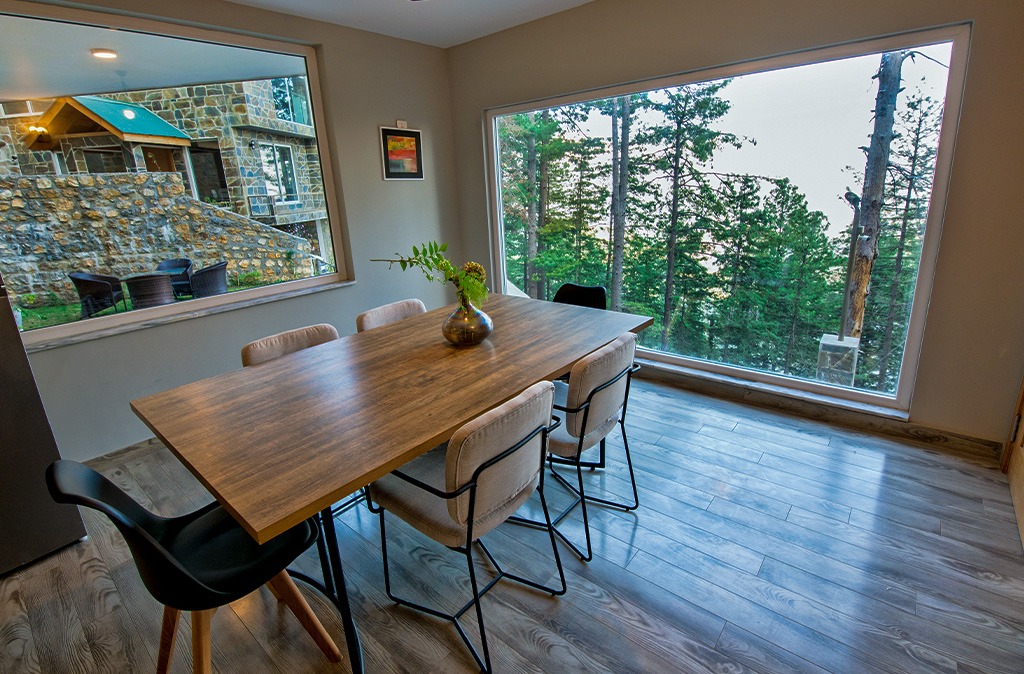
All 33 villas were completed, furnished, handed over, and enrolled within the rental management ecosystem.
Owners have now experienced multiple tourist seasons.
The resulting performance established the benchmark that current buyers use when evaluating active phases.
For investors researching passive income real estate in Pakistan, documented owner outcomes carry significantly more weight than marketing estimates.
The importance of Phase 1 is not simply that returns reached 10 to 12 percent annually.
The importance is that those returns were generated inside a completed, functioning development.
That distinction changes the conversation from possibility to evidence.
Frequently Asked Questions
Real estate becomes a strong passive income source in Pakistan when it operates within a managed system rather than a self-managed rental arrangement. A city apartment can generate income, but it often requires direct involvement from the owner. A managed mountain villa creates a more reliable passive structure because occupancy, maintenance, and operations are handled professionally. This is where passive income from real estate in Pakistan begins functioning as a true investment rather than an additional responsibility.
Passive income real estate in Pakistan within a managed tourist market has supported annual returns of approximately 10 to 12 percent. Delivered projects in Galiyat have generated peak-season rental rates reaching PKR 150,000 per day, depending on property type, occupancy, and seasonality. Combined with capital appreciation, this has contributed to capital recovery models within five to six years.
Yes. Verification of approvals, booking procedures, payment plans, and documentation can all be completed remotely. Overseas Pakistanis regularly purchase property through structured processes without travelling to Pakistan during every stage of the transaction. The critical requirement is verifying approvals and ownership transfer mechanisms before committing funds.
What This Means for a Buyer Building Passive Income
Passive income from real estate in Pakistan is not about owning more property.
It is about owning the right property under the right structure.
A city apartment operating on a self-managed lease may produce income, but it rarely produces freedom.
A professionally managed mountain villa operates differently. It combines rental income, capital appreciation, legal ownership security, and operational support within a single asset.
The strongest opportunities share the same characteristics.
They sit within high-demand locations.
They operate under formal management structures.
They provide legal clarity through verified approvals.
And they produce documented returns rather than theoretical projections.
For investors looking beyond traditional property categories, passive income real estate in Pakistan increasingly points toward tourism-driven mountain developments rather than conventional urban rentals.
Phase 2 and Phase 3 Are Active in Changla Gali. Reserve a Unit Before the Next Season
Blue Pine Mountain Homes continues building on the foundation established by its delivered Phase 1 community.
Phase 1 in Khaira Gali is fully sold, fully delivered, and operating within the rental management ecosystem.
Phase 2 villas in Changla Gali are 40% sold.
Phase 3 villas are approximately 80% sold, while apartments are 50% sold.
All active phases operate within the same verified framework that supported Phase 1 performance.
For investors evaluating passive-income real estate in Pakistan, earlier entry continues to provide the strongest position, as inventory declines while demand increases.
If your objective is to build a property portfolio that generates income while you continue living and working abroad, the next step is straightforward.
Evaluate whether the structure aligns with your investment goals.
Explore Blue Pine Mountain Homes at www.bluepinemh.com
Call: 0322 2226656
WhatsApp: +92 322 2260044
Schedule a call: https://calendly.com/bluepinemh/30min