Most investors searching for high ROI property Pakistan start with familiar categories: urban apartments, commercial plots, and prize bonds. The numbers in each category are well-documented, widely discussed, and increasingly difficult to improve upon as competition pushes prices up and yields down.
What does not appear in those conversations as often as it should is mountain real estate in the Galiyat region, where short-term rental demand, capital appreciation, and limited quality supply have produced annual returns that urban asset classes have not matched in the past three years.
This blog examines the mechanics behind the Galiyat return figure. It explains where the 10 to 12 percent number comes from, what drives it, how it compares against urban alternatives, and what a buyer needs to evaluate before treating it as a reliable income projection. The analysis is grounded in Phase 1 Khaira Gali owner performance and current market pricing in Changla Gali and Dunga Gali.
Why High ROI Property Pakistan Performs Better Than Urban Alternatives
Mountain property in Galiyat generates ROI through two streams at once: short-term rental income across the tourist season and capital appreciation from constrained land supply. Urban yields spread across 12 months of occupancy. Galiyat properties earn the equivalent return inside 100 to 130 peak-season days. That concentration into a short window is exactly why the yield figure runs higher.
How Galiyat Rental Yield Compares to Lahore and Karachi Apartments
Urban rental properties in Lahore and Karachi are yielding between 3 and 5 percent annually on residential units in well-located areas. Commercial properties in established markets perform somewhat better, but acquisition costs have risen sharply since 2021, compressing the yield on new purchases.
If you enter the urban market today, you are paying a price that reflects years of appreciation while capturing a yield that has not kept pace with it.
Galiyat has not followed this compression pattern. Land prices in the region have increased significantly, but rental demand has grown alongside them. Domestic tourism in Pakistan’s northern hills has expanded since 2019, with Khaira Gali, Changla Gali, and Dunga Gali absorbing a significant share of that demand.
The supply of quality furnished properties with professional management has not kept pace with demand. This is why well-positioned mountain homes continue to command strong nightly rates during the tourist season.
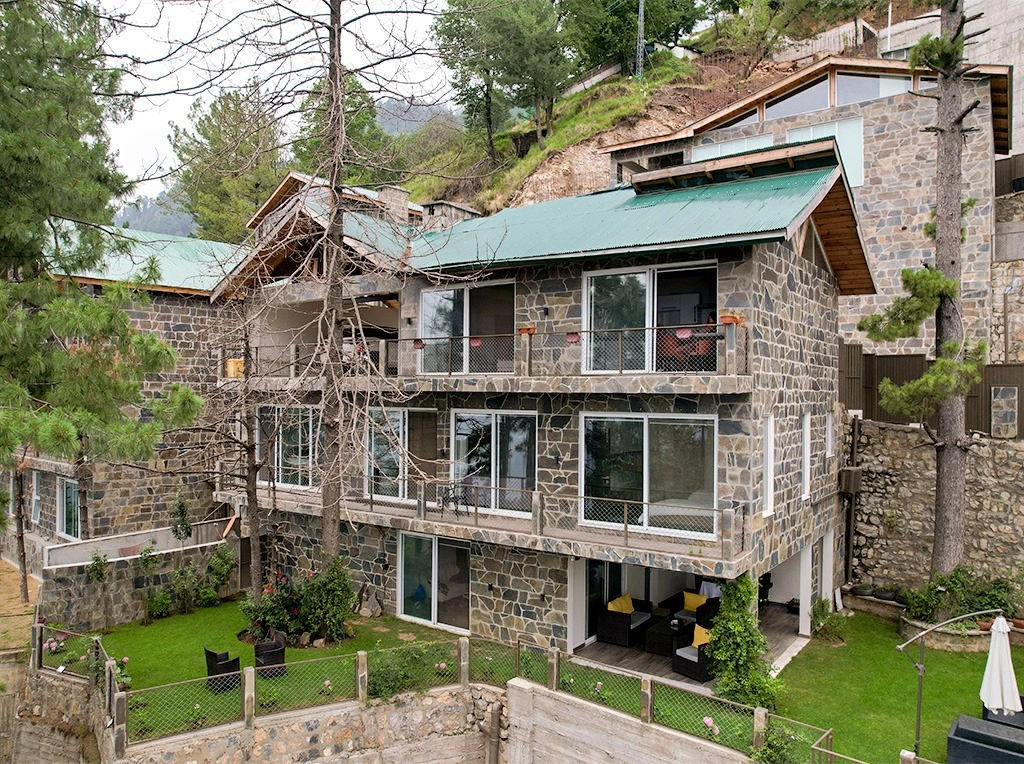
What the 100 to 130-Day Tourist Season Means for a Property Owner
The Galiyat tourist season runs from mid-April through mid-September. This is the period when temperatures in the hills offer a real escape from the heat affecting Lahore, Islamabad, Karachi, and other major cities. Within these 130 days, the strongest occupancy window usually concentrates around June, July, and August, when school holidays and Eid travel push booking rates higher.
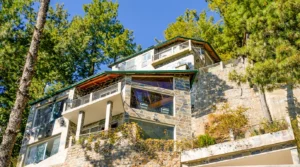
A furnished 3-bedroom mountain home at PKR 40,000 per square foot with a covered area of 2,250 square feet, or 10 Marla, represents a total property investment of approximately PKR 9,00,00,000, or PKR 9 crore. During peak season, a well-managed property in this category in Galiyat can generate nightly rates ranging from PKR 80,000 to PKR 150,000, depending on the phase, view, and occupancy management system.
At an average booking rate of 120 nights across the season and a mid-range nightly figure, a property in this category can generate gross rental income of PKR 9.6 million to PKR 18 million annually.
How the 60:40 Revenue Model Works for Owners
Managed properties in Galiyat typically operate on a revenue-sharing model. The developer or management company handles occupancy, guest services, maintenance, and marketing. The owner receives 60 percent of rental proceeds, while 40 percent covers services and upkeep.
This arrangement matters because ROI should be calculated on the owner’s net share, not the gross rental figure.
On a property generating PKR 9.6 million gross, the owner’s 60 percent share is PKR 5.76 million. Against a PKR 90 million investment, this produces a net rental yield of approximately 6.4 percent. Add capital appreciation of 4 to 6 percent annually, which Galiyat has consistently delivered over recent years, and the total return range lands between 10 and 12 percent.
This is the figure that reflects actual Phase 1 performance, not a speculative model.
How Galiyat Returns Compare Against Urban Property, Plots, and Equities
Galiyat mountain property produces 10 to 12 percent annual returns by combining short-term rental yield with capital appreciation. Urban apartments in Lahore and Karachi yield 3 to 5 percent. DHA Islamabad plots have appreciated 6 to 8 percent annually but generate no rent while undeveloped. Galiyat properties run both streams at once, which is why the combined return lands higher.
If you invest PKR 90 million in a prime urban apartment in Lahore today, you can expect PKR 3 million to PKR 4.5 million in annual rent, assuming the unit stays occupied 11 months of the year. The same capital deployed in a Galiyat mountain property, based on current Phase 2 and Phase 3 pricing, generates rental income through the tourist season while also benefiting from land appreciation.
Stock market investment at comparable risk levels can return 8 to 10 percent in Pakistan over a five-year horizon, but with significant volatility. Government savings instruments currently offer strong nominal returns, but these rates can compress as monetary policy changes. They also do not provide the appreciating physical asset component that property offers.
The Galiyat return profile is therefore not exceptional only because of the headline number. It stands out because of its composition: rental income, capital appreciation, and a physical asset that retains value independent of short-term market volatility.
Why Galiyat Returns Do Not Compress When New Developers Arrive
One structural risk in any high-yield investment is supply expansion. If a location produces strong returns, more developers enter the market, supply increases, occupancy rates fall, and yields compress. In Galiyat, this compression mechanism is limited by regulation and geography.
The Galiyat Development Authority requires GDA NOC approval, KPK Land Revenue Department registration, FBR income source declaration, and approved house maps before any development can proceed. These four requirements are not optional. A developer who cannot produce all four operates outside the legal framework, and buyers of such properties hold unregistered assets with no legal protection.
The geography of Galiyat also limits buildable land. Hill terrain, forest cover restrictions, and proximity to protected areas such as Ayubia National Park reduce the total area where residential development can be permitted. New supply cannot simply be created by purchasing adjacent farmland and subdividing it.
This geographic ceiling means demand growth translates more directly into price appreciation and rental rate strength than it would in a flat urban market.
Phase 1 Khaira Gali: The Only Verifiable Return Data in the Market
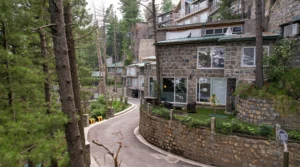
Return projections are easy to produce and easy to question. Verified track records from delivered, occupied projects are a different category of evidence. In the Galiyat market, Phase 1 at Khaira Gali, with 33 villas built, furnished, and handed over to owners, is the clearest source of documented owner return data from a completed development.
Phase 1 Khaira Gali Documented Owner Returns
All 33 villas in Phase 1 were sold, built, furnished, and handed over. Owners have now run multiple tourist seasons through the Blue Pine Serviced Residences rental management model.
Documented returns from Phase 1 owners in Khaira Gali have reached up to PKR 150,000 per day during peak season. Across the full owner portfolio, annual returns sit within the 10 to 12 percent range.
The significance of this data point is not the number alone. It is the fact that the figure comes from actual owners in an actual delivered project, 80 to 95 kilometres from Islamabad, not from a developer’s projection sheet. When a buyer evaluating current phases asks for evidence of the return claim, the Phase 1 owner record provides the reference point.
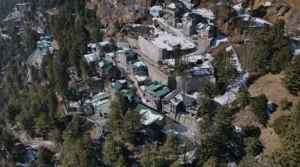
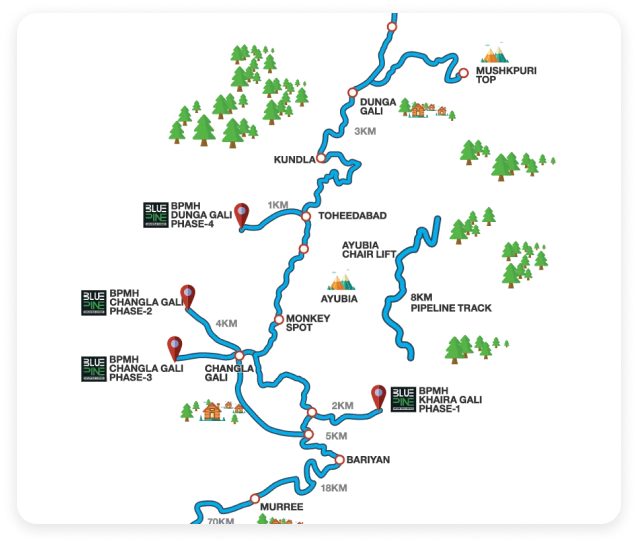
Blue Pine Mountain Homes currently has Phases 2 and 3 active in Changla Gali, with Phase 4 launched in Dunga Gali. Each phase carries the same GDA-verified structure, the same rental management approach, and the same PKR 40,000 per square foot land pricing base. The Phase 1 return record establishes the benchmark buyers in these phases are targeting.
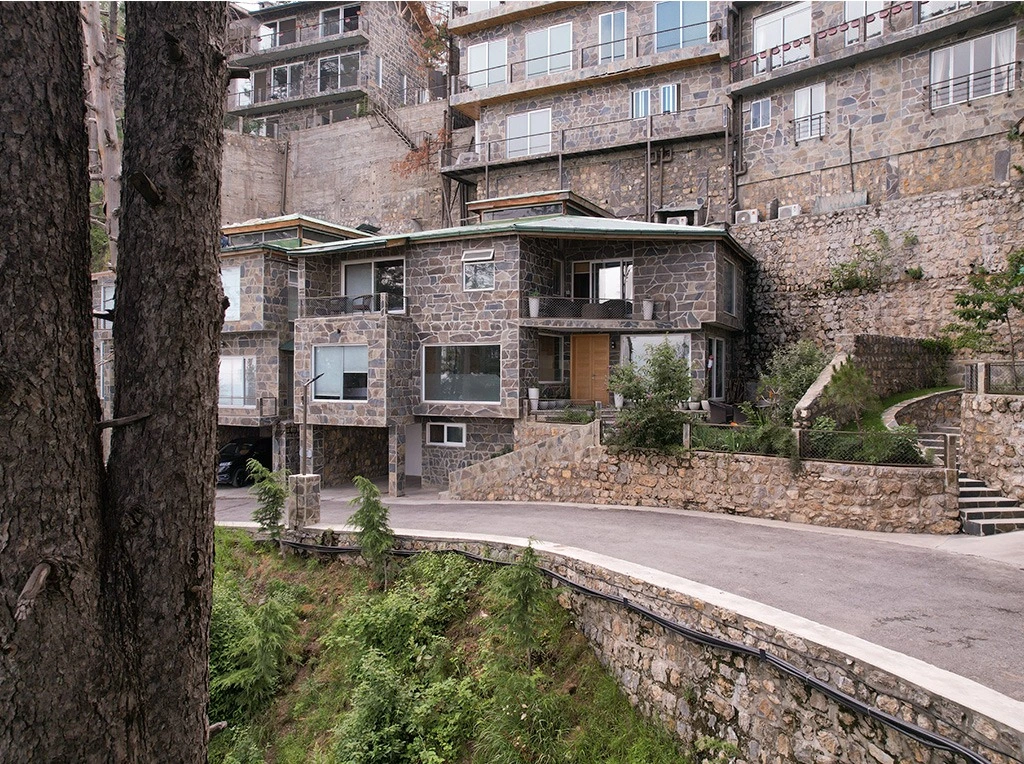
What a Buyer Should Verify Before Using the ROI Figure
Before you treat a 10 to 12 percent ROI figure as reliable, verify four things: the developer holds all four GDA approvals, the project carries a formal rental management agreement with a stated owner revenue share, comparable units in the phase have documented occupancy history, and the per square foot land price matches registered sale documents, not marketing collateral.
The Galiyat market includes projects that reference rental income potential without offering a management structure that can actually generate it. A property whose owner must find tenants, manage bookings, handle maintenance, and coordinate guest turnover will not produce the same returns as a property in a managed community with an established booking pipeline.
Five to Six Year Capital Recovery Payment Structure
The payment structure for current Blue Pine phases requires a 40 percent down payment on land transfer, with the balance over a 1.5-year instalment plan and 10 percent on completion.
If you plan to use rental income to service the instalment schedule, the question that matters is whether one tourist season covers the next instalment tranche. At current occupancy rates in comparable managed properties, Phase 1 owner data suggests this is achievable.
This payment structure is one of the features that differentiates a verified developer from informal plot sales in the same area. Land transfer at 40 percent down is a legal protection, not merely a sales convenience. It means the buyer holds a registered asset from the first payment, not just a booking receipt with a promise of future transfer.
Capital Recovery Timeline and the Five-to-Six Year Model
At 10 to 12 percent annual returns on a PKR 90 million property, gross income over five years approaches PKR 45 million to PKR 54 million. Capital recovery on the total investment requires both the rental income stream and the appreciation component.
Based on Phase 1 performance data and current market pricing trends in Galiyat, a buyer entering the current phases at PKR 40,000 per square foot is modelling capital recovery within five to six years.
This timeline is consistent with what Phase 1 Khaira Gali buyers have experienced. Properties in that phase that were purchased and enrolled in the rental management programme from handover have generated cumulative returns that, combined with assessed value increases in the Khaira Gali market, place early buyers in a favourable capital position within this period.
For investors evaluating returns across asset classes, this timeline compares favourably against urban real estate in equivalent investment brackets, particularly when the property doubles as a usable personal and family asset during the off-season.
Phase 2 and Phase 3 Are Active: Phase 4 Has Launched
For anyone searching for high ROI property in Pakistan, the analysis above is not a projection. It reflects what Phase 1 Khaira Gali owners are already earning.
The return model described in this blog is the documented performance of Phase 1, applied to current active phases. Phase 2 in Changla Gali and Phase 3 in Changla Gali are both currently taking reservations, while Phase 4 at Dunga Gali represents the newest entry point into the Blue Pine ecosystem.
Phase 2 currently has approximately 40 percent of units sold. Phase 3 villas are approximately 80 percent sold, while Phase 3 apartments are approximately 50 percent sold. Phase 4, recently launched, offers the newest position in the development cycle.
Buyers entering earlier phases have historically moved through the capital recovery curve faster because earlier entry means lower cost on the same appreciating asset.
How to Invest in Galiyat Mountain Property Today
To examine the numbers for a specific plot size, understand how the rental management model applies to the current phases, or schedule a site visit to Changla Gali or Dunga Gali before the next tourist season opens, speak directly with the Blue Pine Mountain Homes team.
Explore Blue Pine Mountain Homes at www.bluepinemh.com
Call: 0322 2226656
WhatsApp: +92 322 2260044
Schedule a call: https://calendly.com/bluepinemh/30min