Most overseas Pakistanis lose money on property at home for the same reason: they buy on trust from eight thousand kilometres away and discover the problems only when they fly back. The asset is not registered in their name. The approvals were never in place. The promised rental income never materialized because no one was managing the property. Overseas Pakistani property investment fails far more often on verification than on price, and the verification is exactly the part a buyer abroad is least able to do in person.
This is a checklist built to close that gap. It covers the legal documents that must be in place before money changes hands, the financial structure that protects a buyer paying in stages, and the practical mechanics of completing a purchase from Dubai, London, Riyadh, or Toronto without flying home for every signature. The goal is simple: by the end, an overseas buyer should know precisely what to confirm, in what order, and what a safe transaction looks like from abroad in 2026.
Why Buying Property From Abroad Carries Different Risks
An overseas buyer faces a risk that a resident buyer does not, because distance removes the ability to verify in person and increases reliance on the seller’s word. The core risks are unregistered title, missing development approvals, and rental income that is promised but never managed. Every item on this checklist exists to neutralize one of those three.
The distance problem is structural. A resident buyer can visit the land office, walk the site, and ask neighbours about the developer’s track record. A buyer in Riyadh is working from photographs, phone calls, and documents sent over WhatsApp. That asymmetry is precisely what weak developers rely on. The remedy is not to trust harder. It is required to provide documentation that can be independently cross-checked, regardless of who presents it.
The second difference is the income expectation. Many overseas buyers are not purchasing a home to live in. They are buying an asset that should earn while they remain abroad. That changes the due diligence entirely. A property that is legally clean but has no management structure behind it will sit empty and earn nothing. For an overseas investor, the operating model is as important as the title deed, and both have to be verified before purchase rather than discovered after.
The Legal Checklist: Five Documents That Must Exist Before You Pay
When you evaluate any project from abroad, these are the five documents to confirm in writing before any payment. Ask for each by name, and treat the absence of any one as a reason to stop.
The first is development authority approval. In Galiyat, this is the No Objection Certificate from the Galiyat Development Authority. A GDA NOC is a specific document with a reference number that can be cross-checked with the authority directly. A developer who cannot produce it is selling something the regulator has not sanctioned.
The second is the registry transfer mechanism. Confirm that the title can be transferred into your name through the KPK Land Revenue Department. This is what converts a payment receipt into legal ownership. Without a clear transfer pathway, a buyer holds a contract, not a property.
The third is the approved building map for the specific unit. An approved map confirms that the structure itself, not just the land, is sanctioned. Construction that deviates from an approved map is a future legal problem waiting for the buyer who funded it.
The fourth is the income source declaration. This document supports the legitimacy of the funds and the transaction, which matters acutely for overseas buyers remitting money into Pakistan and for the tax position on both ends.
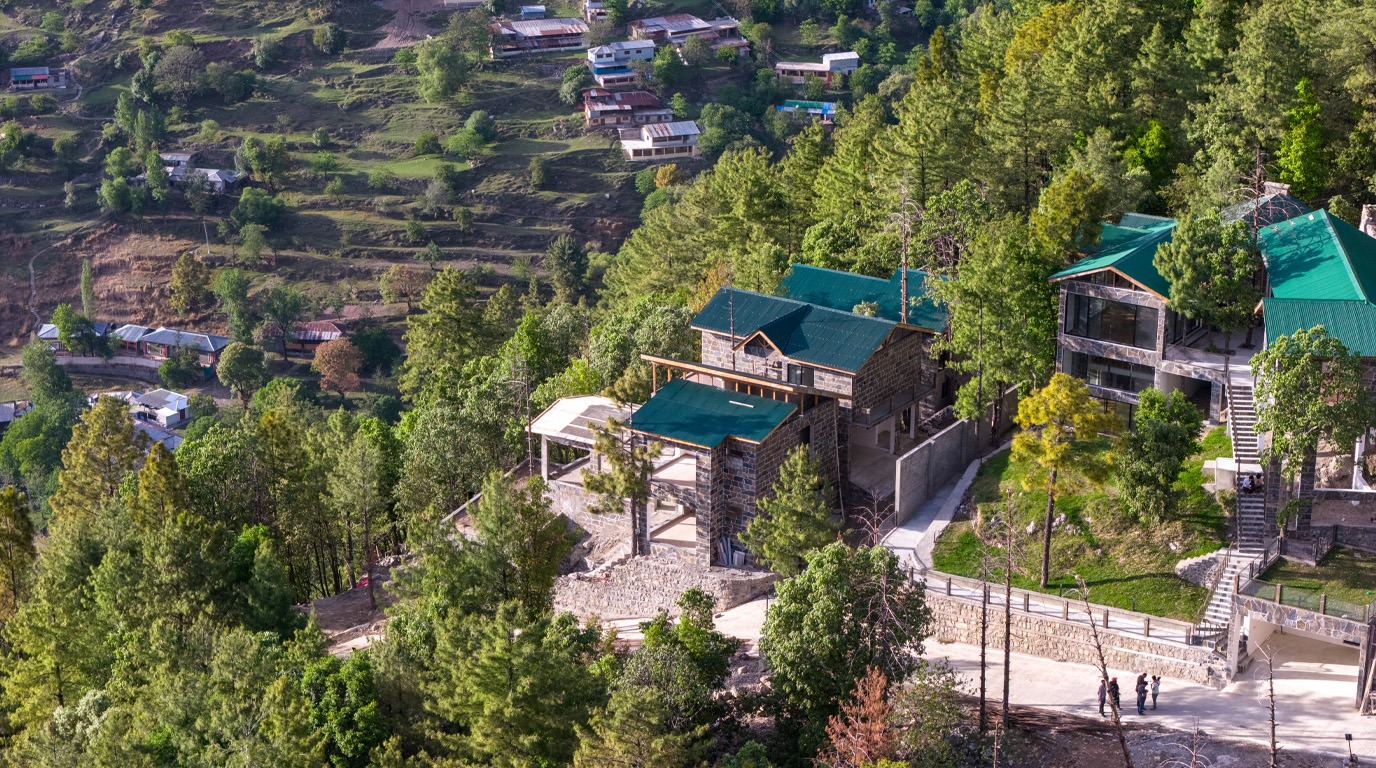
The fifth is evidence of delivery. Approvals prove intent. A completed, handed-over project proves capability. A developer who has delivered a project in full, with owners holding registered title and collecting income, has demonstrated something no brochure can. In Galiyat, the Blue Pine Mountain Homes development at Phase 1 Khaira Gali is a fully delivered and sold-out first phase, which is the strongest single credential a buyer can ask to see.
The Financial Checklist: Structure Protects the Distant Buyer
Once the legal position is confirmed, the financial structure decides how exposed a buyer is during the period between paying and owning. For an overseas investor, the safest structures share three features: a staged payment, early transfer of registered title, and an income model that is defined in writing.
Staged payment matters because it spreads exposure. A structure that secures the asset with 40 percent down and clears the balance across an installment period concentrates far less risk at any single moment than paying the full amount upfront against a future handover. In verified Galiyat developments, land ownership transfers at the 40 percent stage, which means the buyer holds a registered title early in the cycle rather than at the end. Holding title while installments are still running is a materially stronger position for someone managing the purchase from abroad.
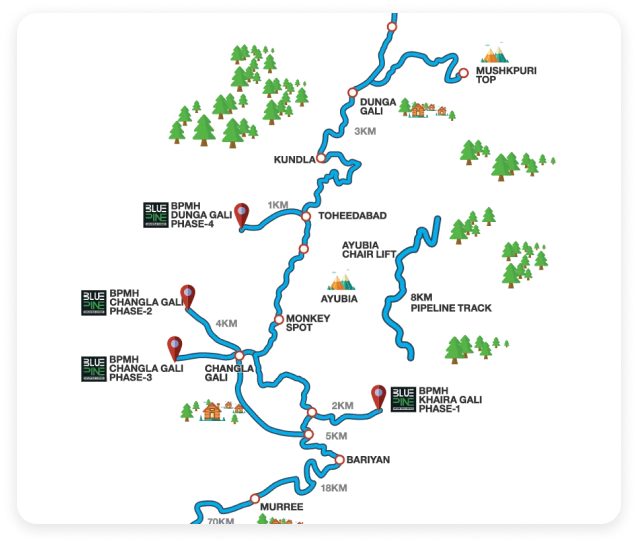
The purchase basis should be clear and fixed. In the Changla Gali developments, verified managed homes are priced at PKR 40,000 per square foot, with the built structure included inside a serviced, secured community rather than sold as a bare plot. A fixed per-square-foot basis lets an overseas buyer model the full cost precisely before committing.
The income model has to be written down. A 60:40 revenue-share arrangement, where the owner receives 60 percent of rental proceeds, and the operator retains 40 percent for service and maintenance, defines exactly what the buyer earns and what the operator is responsible for. Properties in Changla Gali, 80 to 95 kilometres from Islamabad, operate within a 100 to 130-day tourist season. In Phase 1 Khaira Gali, this supported 10 to 12 percent annual ROI, with peak-season rental reaching up to PKR 150,000 per day and capital recovery within five to six years under active rental management. Those are figures an overseas buyer can verify against owner documentation rather than accept on faith.
One financial point is specific to non-resident buyers and worth handling early. Funds remitted into Pakistan should move through formal banking channels and be documented, because the paper trail supports both the income source declaration and the buyer’s tax position at home and in Pakistan. An overseas buyer holding registered title should also understand the difference in tax treatment that applies to filers versus non-filers, as it affects the rate paid on the eventual transfer or sale. None of this is an obstacle. It is simply part of the financial checklist that a resident buyer rarely has to think about, and an overseas buyer should confirm before remitting the first installment.
How to Complete a Booking From Abroad
The verification and financial checks can all be done remotely. So can the purchase itself. A serious overseas buyer does not need to fly home to secure a unit. The process is built around remote completion, with an in-person site visit as an optional final step rather than a precondition.
The sequence runs in a logical order. First, a scheduled video consultation walks through available inventory, the per-square-foot pricing, the installment structure, and the revenue-share model, so the buyer understands the full position before committing anything. Second, the verification documents above are confirmed, each by name and reference. Third, the unit is reserved, and the booking is formalized. The Blue Pine Mountain Homes booking process is designed so that an overseas buyer can complete the reservation, paperwork, and the 40 percent down payment through standard banking channels without being physically present.
This is the point where the branded process earns its place in the checklist. A booking handled through a defined remote process, with a scheduled consultation and documented verification at each stage, is the practical answer to the distance problem this guide opened with. The buyer is not signing on trust. They are completing a sequenced transaction in which every step can be confirmed from their own desk in Dubai or London.
The site visit, for those who can make it, is the confidence step rather than the gateway. Buyers who travel walk the delivered Phase 1 standard and inspect active inventory in Changla Gali in person. Those who cannot complete remotely and visit on their next trip home. Either way, the asset enters the managed rental pool and begins earning on the same basis, regardless of where the owner is living.

Can overseas Pakistanis legally buy property in Pakistan?
Yes. Overseas Pakistanis can legally buy and own property in Pakistan, including holding a registered title in their own name. The key requirements are a clear registry transfer through the relevant land revenue department, valid development approvals on the project, and an income source declaration to support the remittance of funds. Confirming these documents by name before payment is what separates a safe purchase from a risky one.
What documents should an overseas buyer verify before investing?
An overseas buyer should confirm five documents before paying: the development authority approval, such as a GDA NOC with a reference number; the registry transfer mechanism through the KPK Land Revenue Department; the approved building map for the specific unit; the income source declaration; and evidence of a delivered project. Each of these can be cross-checked independently, which is what makes them reliable from a distance.
Can an overseas Pakistani complete a property purchase without travelling to Pakistan?
Yes. The consultation, document verification, unit reservation, and 40 percent down payment can all be completed remotely through a scheduled video call and standard banking channels. A site visit is recommended as a final confidence step for buyers who can travel, but it is not a requirement, and the property begins earning under the managed rental model regardless of where the owner is based.
What This Means for an Overseas Buyer in 2026
Overseas Pakistani property investment is not a question of finding the cheapest entry or the highest advertised yield. It is a question of verification, structure, and process. The buyers who succeed from abroad are the ones who confirm the five legal documents before paying, insist on a staged financial structure with early title transfer, and complete the purchase through a defined remote process rather than an informal arrangement built on trust.
Galiyat in 2026 offers a market where this is possible. The legal framework exists through GDA approval, KPK Land Revenue Department registry transfer, and income source declaration. The financial structure exists in the form of a 40 percent down position with land transfer at that stage and a written revenue-share model. And a delivered, sold-out first phase exists as proof that the framework produces real ownership and real income, not promises.
Phase 2 and Phase 3 Are Active in Changla Gali. Book a Remote Consultation Before the Next Season
Phase 1 Khaira Gali is 100 percent sold and fully delivered, with all 33 villas built, handed over, and operating in the rental pool. Phase 2 villas in Changla Gali are 40 percent sold. Phase 3 villas are 80 percent sold, and apartments are at the halfway mark. Both active phases are GDA-approved and built by the same developer who delivered Phase 1 in full.
For overseas buyers, every step from verification to down payment can be handled without flying home.
Explore Blue Pine Mountain Homes at www.bluepinemh.com
Call: 0322 2226656
WhatsApp: +92 322 2260044
Schedule a call: https://calendly.com/bluepinemh/30min